
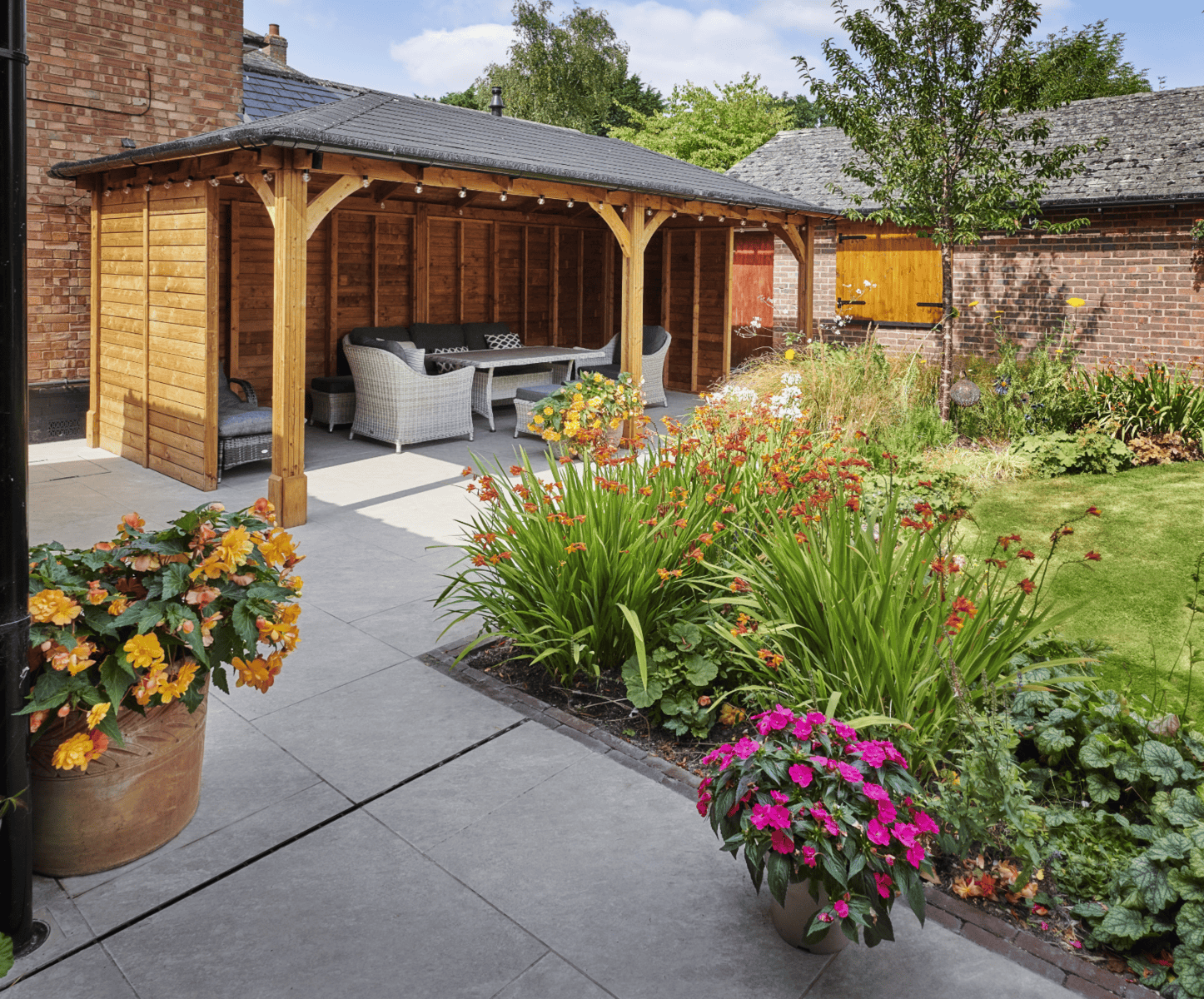
Thinking about using porcelain tiles in your garden or on your patio? You’re not alone, they’ve become one of the most popular choices for outdoor spaces. But are they really up to the task of handling the UK weather?
Are Porcelain Tiles Suitable for Outdoors?
Yes! Porcelain tiles are a fantastic option for outside as long as you choose the right type.
We recommend exterior-grade 20 mm porcelain tiles, which are made specifically for outdoor use. These are much more durable than indoor tiles and come with added slip resistance.
Key Benefits:
- Tough and long-lasting
- Low maintenance and no sealing required
- Stain, scratch and fade resistant
- Non-porous, resists algae and moss build-up
- Available in modern, sleek finishes
Are Porcelain Tiles Slippery When Wet?
Not if you choose the right ones. Look for tiles with an R11 slip rating or higher, which means they’re designed for grip even in wet conditions.
⚠️ Avoid using indoor porcelain tiles outside – they don’t have the same surface texture and can be dangerous when wet.
Will Porcelain Crack in Cold Weather?
No, not if installed correctly. Porcelain paving is frost-resistant and doesn’t absorb water like natural stone can. This makes it much less likely to crack during the colder months.
However, correct installation is essential. Tiles must be laid on a solid, level base using the right outdoor adhesive and grout. Poor installation can lead to cracking or movement over time.
💡 Tip: Always use a qualified, experienced installer to get the best long-term results.
Disadvantages of Porcelain Tiles Outside
Porcelain is brilliant, but no material is perfect. Here are a few potential downsides:
- Cost – Porcelain is a premium material and usually costs more than concrete or budget paving slabs.
- Hard to Cut – Because it’s so dense, it requires specialist tools and skill to shape and install.
- Modern Aesthetic – If you’re looking for a very traditional or rustic appearance, you might prefer natural stone, such as sandstone or limestone, instead.
How Easy Are They to Maintain?
Very! One of the biggest benefits of porcelain is how low-maintenance it is.
- No need for sealing or special treatments
- Easy to clean with just a brush or pressure washer
- Resists stains – ideal for BBQs and outdoor dining spaces
Interested in Porcelain Paving?
Our team at Hertfordshire Drives and Landscapes has fitted stunning porcelain patios and walkways across the region. We offer expert advice and professional installation.