
If you are planning a new driveway, one of the first questions is usually how much it is likely to cost.
As a broad UK benchmark, professionally installed driveways are commonly quoted from around £60 per m² at the simpler end of the market to £120 per m² or more for some finishes. Current national cost guides place gravel towards the lower end and resin-bound or more involved paved finishes towards the upper end. These figures are useful for early budgeting, but they are not a reliable way to price an individual driveway.
The reason is simple: you are not only paying for the material you can see.
A properly constructed driveway may involve removing the existing surface, excavating unsuitable ground, creating a stable sub-base, managing surface water, installing edging and then laying the final finish. Access, levels, waste removal and the condition of the existing frontage can change the amount of work considerably.
For that reason, HDL assesses the individual site before providing a firm quotation for a new driveway in Hertfordshire.
What affects the cost of a new driveway?
Two driveways of a similar size can require very different amounts of work.
The main factors affecting the quotation are:
- the overall size and shape of the driveway
- the existing surface and how much needs removing
- ground conditions beneath the driveway
- excavation and sub-base requirements
- drainage and rainwater management
- access for machinery and materials
- the surface material you choose
- edging, paths, steps, walls and other detailing
- changes in levels
- waste removal and site management
Some of these decisions are visible in the finished driveway. Others disappear completely once the work is complete, but they can have just as much influence on both the cost and long-term performance.
Why groundwork makes such a difference
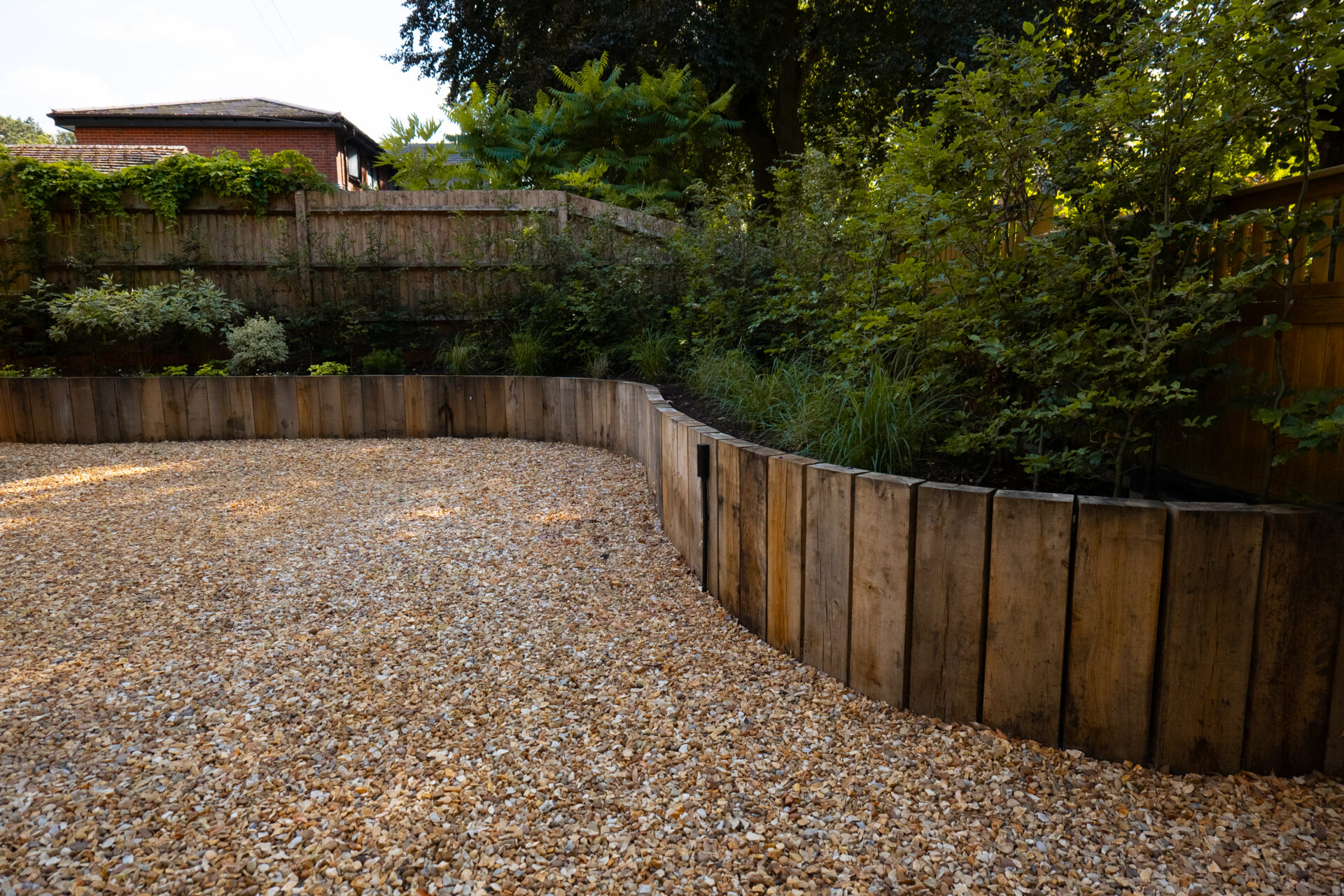
A new driveway needs to support vehicles repeatedly without becoming uneven, sinking or breaking up.
That means the condition of the ground beneath the finished surface matters.
On one property, the existing formation may be relatively straightforward to prepare. On another, more excavation may be required before a suitable sub-base can be constructed. Existing concrete, poorly compacted fill, tree roots, changes in level or unstable ground can all alter the scope.
Hertfordshire also has varied underlying geology. Chalk, flint, clay and superficial deposits occur across the county, sometimes changing over relatively short distances. British Geological Survey information shows, for example, that clay-with-flints deposits occur over parts of Hertfordshire and can themselves be highly variable.
That is why we would not recommend choosing a driveway specification purely from an online price per square metre.
The surface is important, but it needs an appropriate structure beneath it.
How much does excavation affect driveway cost?
If an existing driveway needs to be removed, excavation can form a significant part of the job.
This can include:
- breaking out old concrete or paving
- removing unsuitable sub-base material
- reducing levels to create sufficient construction depth
- loading and removing spoil
- preparing the formation for the new driveway
The amount of material being removed matters, as does access.
A driveway with clear access for machinery is very different to a frontage where excavation and waste removal are restricted by narrow entrances, neighbouring properties, walls or limited space for vehicles and skips.
Current UK cost guides also identify excavation and ground preparation as one of the main reasons otherwise similar driveway projects vary in price.
Does the driveway surface affect the price?
Yes, but it is only one part of the quotation.
Different surfaces involve different material costs, preparation methods and installation requirements.
Gravel driveways
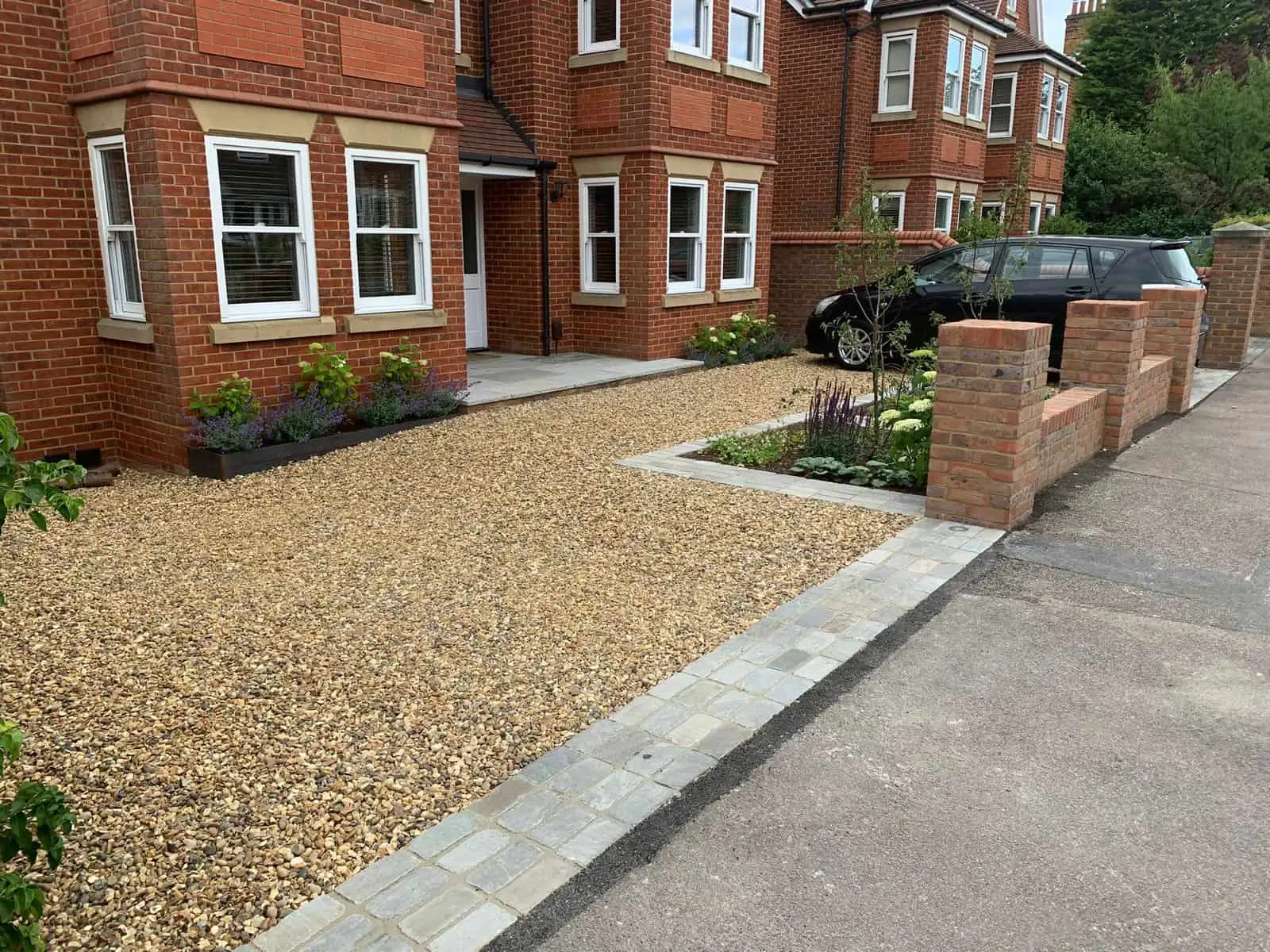
Gravel is generally one of the more economical driveway finishes and can work particularly well with traditional or rural properties.
The installation still needs appropriate excavation, a suitable sub-base, containment and consideration of how the gravel will behave around entrances, slopes and pedestrian areas.
Block paving
Block paving involves laying individual units to create the finished surface, so installation is relatively labour-intensive.
The choice of block, laying pattern, border details and amount of cutting can all influence the overall cost.
Resin-bound driveways
Resin-bound surfacing creates a consistent finish using aggregate mixed with resin.
Cost will depend on the aggregate and system selected as well as the construction beneath it. A resin-bound surface should also not be confused with resin-bonded surfacing, which is a different system.
Natural stone
Natural stone can provide considerable character, particularly around period and traditional homes.
Material selection, unit size, cutting and laying detail can make the installation more involved than simpler driveway finishes.
Concrete
Concrete can provide a robust, relatively simple driveway surface, but preparation, movement detailing, drainage and the required finish still need to be properly considered.
If you are deciding between these options, our Which driveway surface should I choose? guide will compare their appearance, practicality and maintenance requirements in more detail.
How drainage can affect the quotation
Drainage should be considered before the driveway is installed, rather than treated as an afterthought.
Levels and surface falls need to determine where rainwater goes. The appropriate solution will depend on the surface, ground conditions and the existing property.
This can influence the quotation where a project requires drainage channels, permeable construction, changes to levels or another suitable means of managing runoff.
There is also a planning consideration for front gardens. In England, traditional impermeable surfacing covering more than 5m² generally requires planning permission unless provision is made for water to drain to a permeable area within the property. Permeable surfacing can fall within permitted development subject to the relevant conditions.
We cover this separately in Do I need planning permission for a driveway?
Does access affect the cost of a driveway?
It can.
Good access can make excavation, deliveries and waste removal considerably more straightforward.
Restricted sites may require more manual handling or smaller machinery. The location of the property can also affect where materials can be delivered and how spoil is removed.
This is one of the reasons a quotation based only on an approximate driveway size can be misleading.
The contractor needs to understand how the work will actually be carried out.
What about edging, walls and the rest of the frontage?
A driveway rarely exists in isolation.
The overall project may also involve:
- edging courses
- entrance paths
- steps
- retaining or boundary walls
- fencing and gates
- planting areas
- changes to existing lawns or borders
- additional parking
- routes to the front door
- drainage details
These elements add to the scope, but they can also make the finished frontage work much better.
If the aim is to create more parking, for example, the best answer is not necessarily to pave every available metre. A considered layout may retain planting, create a clearer pedestrian route and improve the relationship between the driveway and the house.
HDL can coordinate this as part of the wider frontage rather than treating the driveway as a separate strip of hardstanding.
See more information about our approach to Driveway projects here.
Does replacing a driveway cost more than resurfacing one?
Not always, because it depends on what is already there.
If the existing construction is sound and suitable for the intended finish, some projects may allow elements of it to be retained.
If the driveway has significant settlement, poor levels, inadequate drainage or an unsuitable base, simply covering the existing surface may only conceal the underlying problem.
A site assessment should establish what can genuinely be reused before deciding whether resurfacing is appropriate.
If a quotation appears substantially cheaper because it avoids removing or rebuilding an existing base, it is worth understanding why that approach is considered suitable for the particular driveway.
Why price per square metre only tells part of the story
Price-per-square-metre figures are useful for comparing broad material categories, but they can create a false sense of precision.
Imagine two 50m² driveways.
One has easy access, straightforward levels and a suitable existing formation.
The other requires an old slab to be broken out, greater excavation, additional drainage, extensive edge detailing and restricted access for machinery.
Their finished area is identical. Their construction requirements are not.
The second driveway should not be expected to cost the same simply because both measure 50m².
That is why the most meaningful comparison between quotations is the scope and specification, not only the final figure.
What should a driveway quotation include?
A clear quotation should make it possible to understand what is being allowed for.
Depending on the project, this may cover:
- site preparation
- removal of the existing driveway
- excavation
- removal of waste
- sub-base construction
- drainage
- edging
- the chosen driveway surface
- steps, paths or other associated work
- finishing and site clearance
If two quotations differ significantly, check whether they are actually allowing for the same work.
A cheaper quotation based on less excavation, a different construction build-up or omitted drainage is not necessarily an equivalent quotation.
How can I budget for a new driveway?
For early planning, start with three questions.
1. How large is the area?
Measure the approximate length and width so you understand the overall scale.
Do not worry if the shape is irregular. A professional site measure can establish the final area later.
2. What sort of finish are you considering?
You do not need to have selected an exact product, but knowing whether you are leaning towards gravel, paving, resin, stone or another finish helps establish the likely direction.
You can also visit the HDL showroom to compare selected materials and finishes in person.
3. What else needs to change?
Think about the whole frontage.
Do you need additional parking? Is drainage currently a problem? Does the path need replacing? Are boundaries, steps or planting changing at the same time?
Those decisions are often more useful at the early stage than trying to calculate an exact cost from an online £/m² figure.
How do I get an accurate driveway quotation?
The most reliable way to understand the cost is to assess the actual property.
At HDL, we look at the available space, existing construction, access, levels, drainage requirements and the finish you are considering before confirming the scope.
That allows the quotation to reflect the driveway you are actually building rather than an assumed standard specification.
We design and install residential driveways across Hertfordshire, including projects around Hitchin, Letchworth, Stevenage, St Albans, Baldock and surrounding areas.
Planning a new driveway in Hertfordshire?
A good driveway quotation should explain more than what the surface costs.
The important question is what needs to be done to create a driveway that suits the property, manages everyday use properly and has the right preparation beneath the finished surface.
If you are considering a new driveway, HDL can assess the frontage, talk through material options and advise on the work required before providing a quotation.